
protective coatings
Carbyne
biobased materials
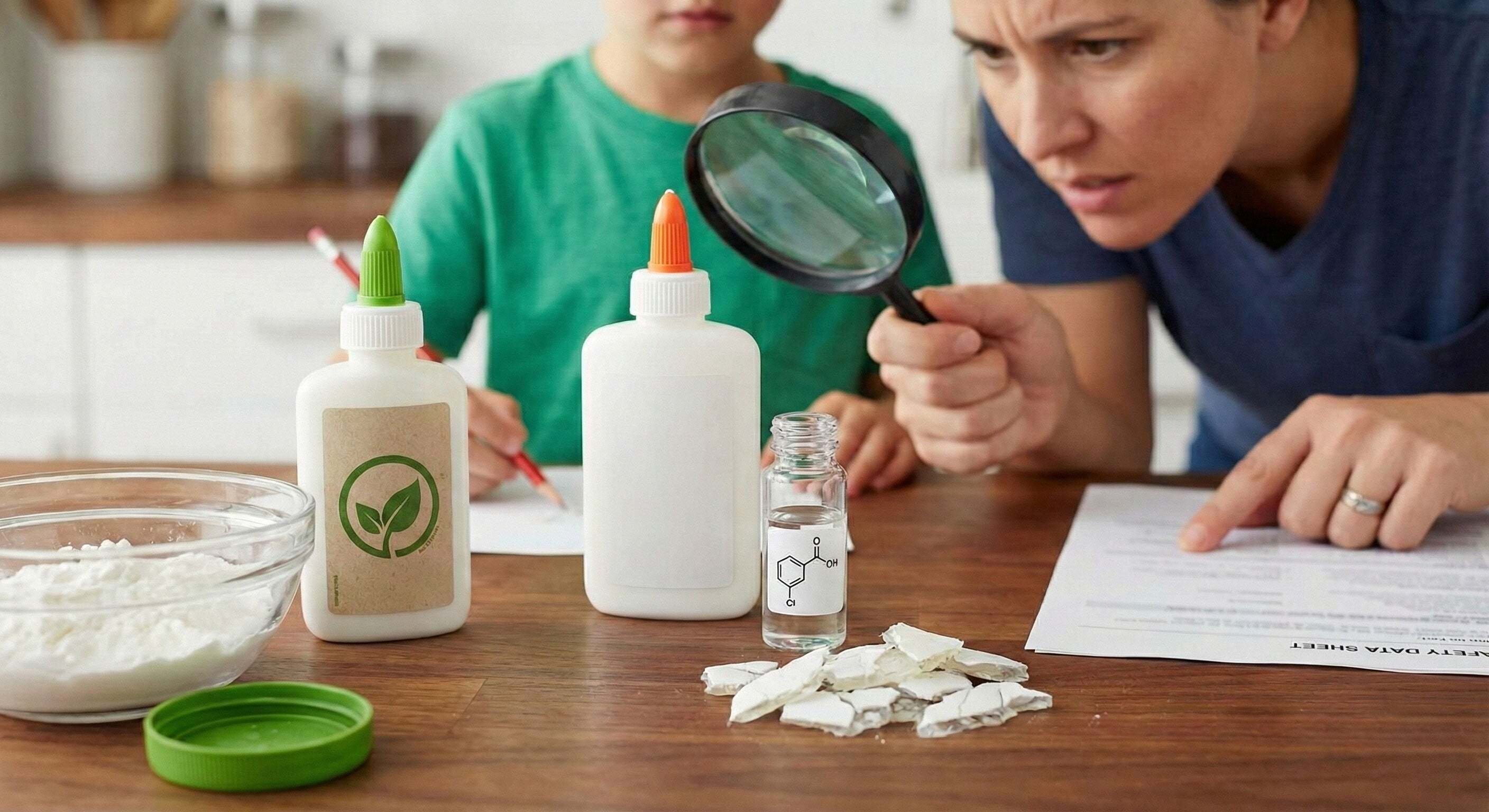

From construction paper masterpieces to science fair boards, school glue is a daily part of childhood. Most parents toss a bottle into the cart without thinking twice, because it’s just glue, right?
But many traditional school glues are made using vinyl acetate, a chemical building block that often raises questions once parents start reading labels or noticing California Prop 65 warnings.
If you’ve ever paused and wondered “Should I be worried about this?” You’re not alone.
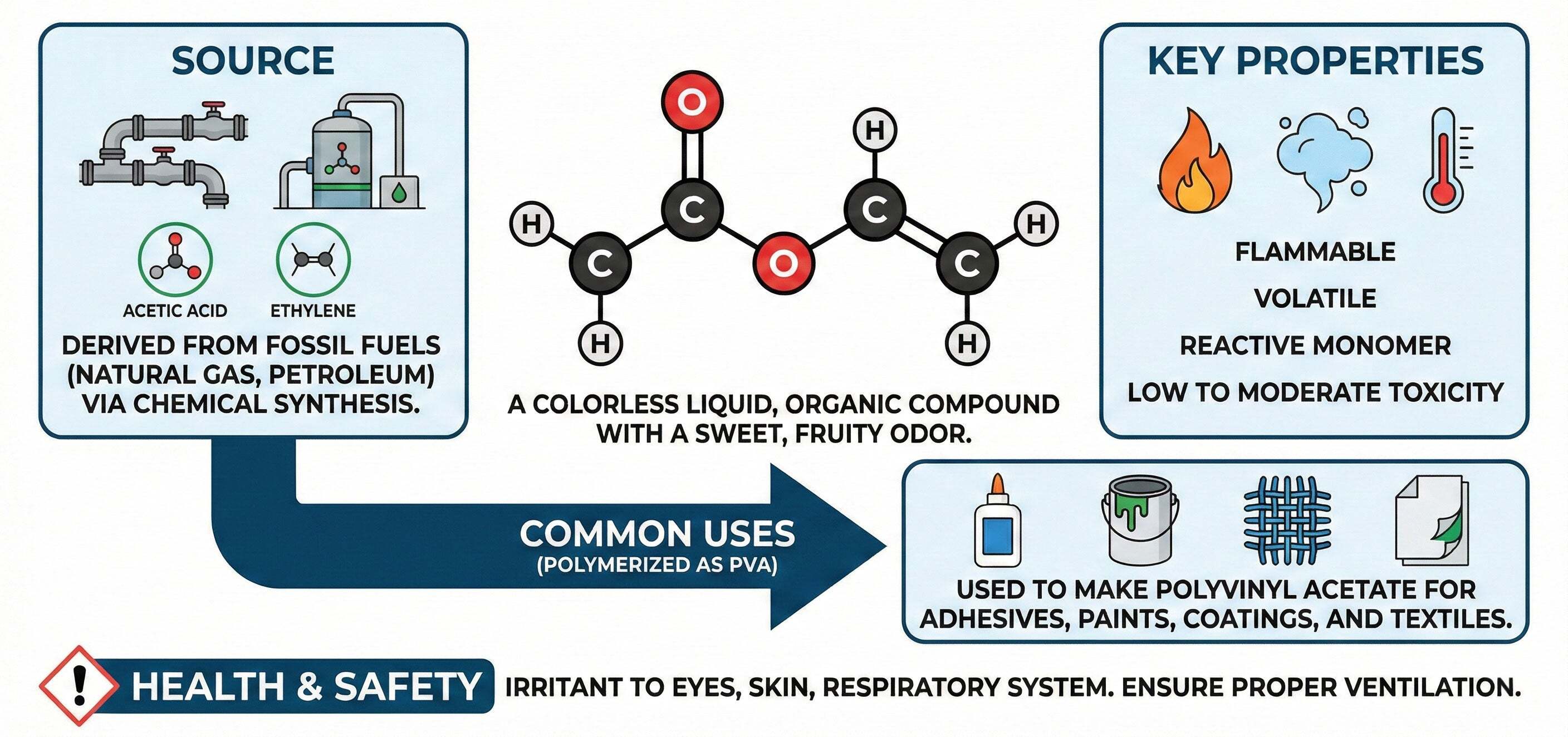
Vinyl acetate is commonly used to create polyvinyl acetate (PVA), the base material in many conventional school glues. It’s been around for decades and works well for paper and crafts, which is why it became the default.
That said, vinyl acetate is also a regulated chemical. In its raw form, it has been evaluated for potential health risks tied to inhalation exposure at higher levels—especially in industrial or poorly ventilated environments.
Finished school glue isn’t the same as raw vinyl acetate, but the presence of this chemistry is why some products carry warnings that catch parents off guard.

Parents today are more informed than ever—and kids are using school supplies more frequently, earlier, and often at home.
Common concerns we hear from moms include:
These questions aren’t about panic. They’re about reducing unnecessary exposure when better options are available.
California Prop 65 requires warnings when certain listed chemicals may be present above defined thresholds. Vinyl acetate appears on that list due to specific exposure scenarios—not because every product containing it is inherently dangerous.
The challenge is that warning labels don’t explain context. They don’t tell you:
For parents, that lack of clarity can be frustrating.
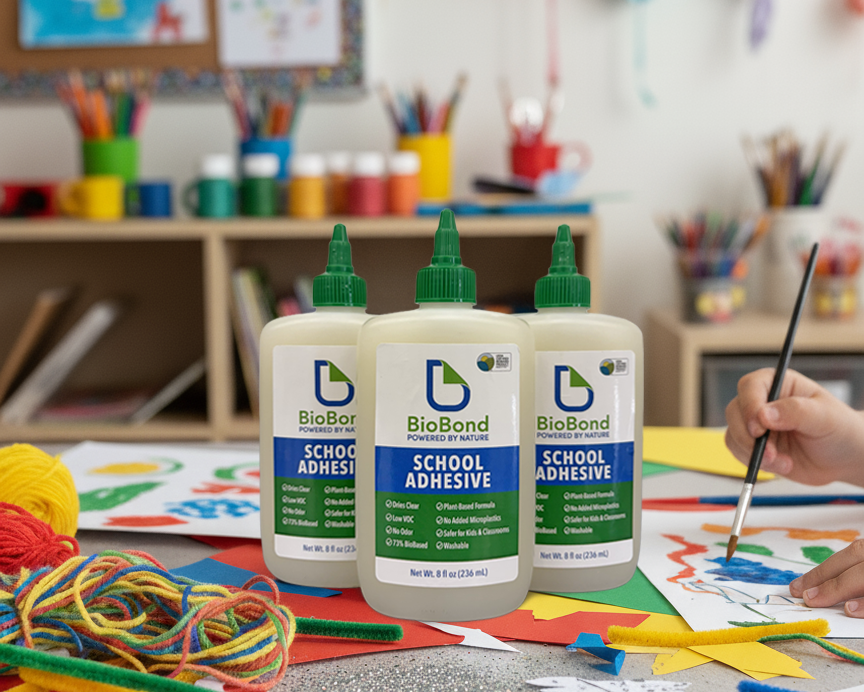
BioBond School Adhesive was developed with classrooms—and kids—specifically in mind. Instead of relying on traditional vinyl acetate–based chemistry, BioBond uses plant-based adhesive technology engineered for everyday school use.
What that means for families:
It’s the same performance kids need—without relying on the chemistry that causes many parents to hesitate.
No single school supply defines a child’s environment. But when glue is used daily, year after year, small formulation decisions start to matter.
Choosing an adhesive designed for classrooms isn’t about fear—it’s about intention.
BioBond School Adhesive gives parents confidence that the products their kids use every day were created with care, transparency, and real-world family use in mind.
Whether you’re shopping for back-to-school supplies or restocking your craft drawer at home, BioBond offers a school adhesive that prioritizes performance and thoughtful material choices.
👉 Buy our school adhesive today!